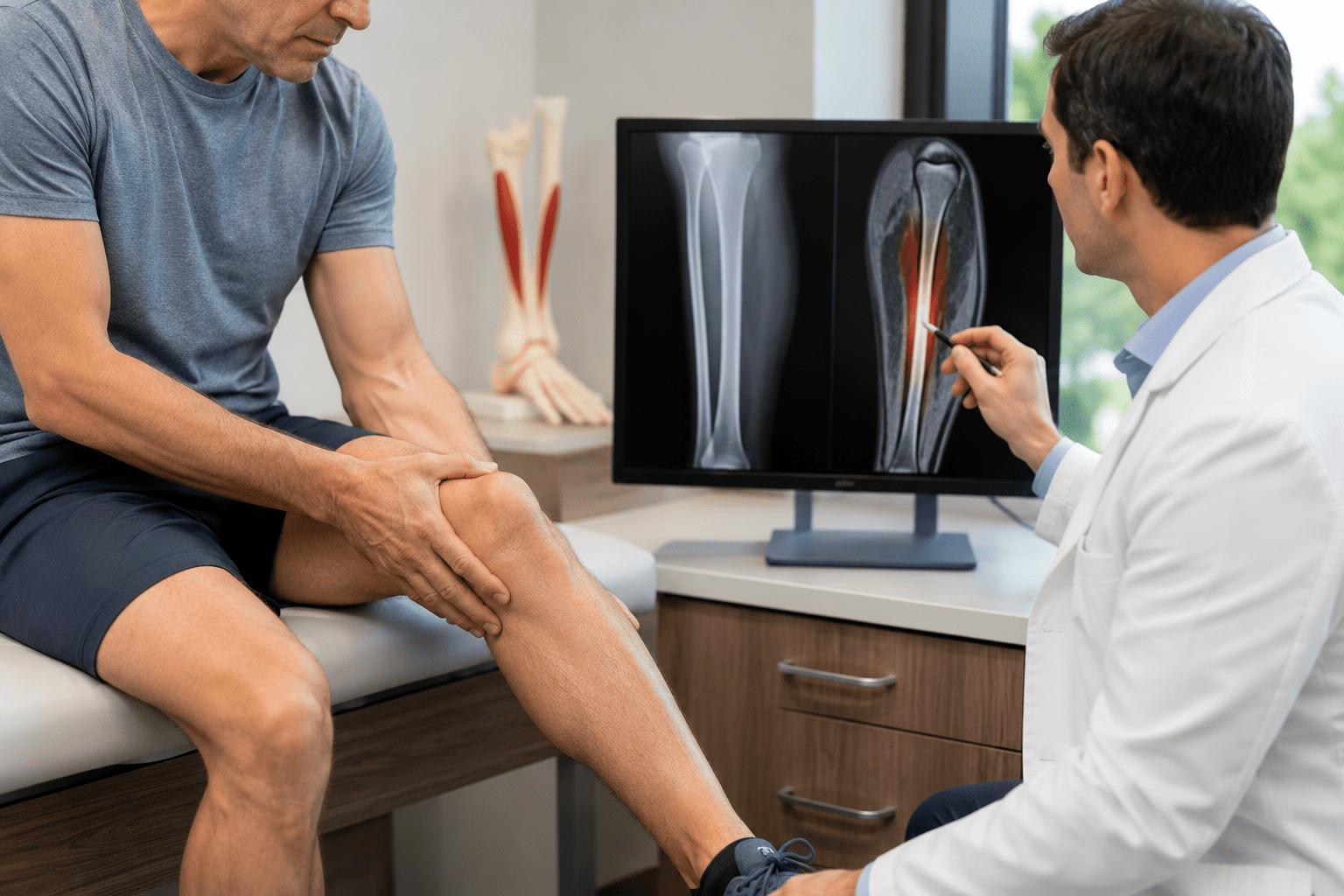
Quick Summary: Lower leg pain in runners is commonly caused by either shin splints or stress fractures, but the symptoms are different. Shin splints typically cause a dull, widespread ache along the shin that may improve during activity, while stress fractures create sharp, localized pain that worsens with impact and may persist even at rest. Early evaluation by a sports podiatrist can help prevent worsening injury, shorten recovery time, and safely guide runners back to activity.
Spring in Michigan brings runners back outdoors, from neighborhood sidewalks to the scenic paths along Lake St. Clair. As the weather improves, many runners naturally increase their mileage, train harder, and begin preparing for summer races. Unfortunately, that sudden increase in activity can also bring an all-too-common problem: persistent lower leg pain.
For many runners, a lingering ache in the shin creates an immediate question: Is this a temporary overuse injury that will improve with rest, or could it be something more serious? Misjudging the source of your pain can delay recovery, worsen the injury, and potentially sideline your entire running season.
Understanding the Difference: Shin Splints vs. Stress Fractures
Not every case of shin pain is the same. Some injuries involve irritation of the muscles and connective tissues, while others involve actual damage to the bone itself. Understanding the difference matters because the treatment — and the risk of worsening the injury — can vary significantly.
Shin Splints (Medial Tibial Stress Syndrome)
When repetitive stress impacts the muscles, tendons, and bone tissue surrounding your tibia, it frequently results in medial tibial stress syndrome, commonly known as shin splints. This condition is especially common in runners who increase mileage too quickly, start hill training suddenly, or transition to harder running surfaces like concrete sidewalks.
Common signs of shin splints include:
- A dull, aching pain along the inner edge of the shinbone
- Pain that feels more spread out rather than isolated to one spot
- Discomfort that may improve slightly as the muscles warm up during activity
- Tenderness along a broader section of the shin
Many runners with shin splints notice the pain becomes worse after exercise rather than during the run itself.
Stress Fractures
A stress fracture is a small crack in the bone caused by repetitive impact and inadequate recovery time. In runners, stress fractures commonly develop in the tibia or the metatarsal bones of the foot.
Unlike shin splints, stress fracture pain is usually much more localized and progressively worsens with continued activity.
Common signs of a stress fracture include:
- Sharp or deep pain that can be pinpointed to one exact area
- Pain that worsens with every step or impact activity
- Discomfort that continues even during normal walking or at rest
- A highly tender spot on the bone, sometimes with visible swelling
Many runners are surprised to learn that stress fracture pain often becomes noticeable during everyday activities — not just while running. Continuing to train through this type of pain can worsen a small crack into a more significant fracture.
The Danger of Guessing: Why Rest Alone Is Not Enough
Many runners try to “push through” lower leg pain or assume a few days of rest will solve the issue. However, treating a stress fracture like a minor overuse injury can significantly delay healing and increase the risk of a more serious bone injury.
At the same time, completely stopping activity without understanding the true cause of the pain can feel frustrating and discouraging for active individuals trying to stay on track with training goals.
Early evaluation helps remove the uncertainty and allows you to begin the right treatment before the condition worsens.
How Eastside Podiatry PLLC Helps Runners Recover Safely
At Eastside Podiatry PLLC, we understand how frustrating it can be when pain interrupts your training and limits your mobility. As the sports podiatrist trusted by runners across St. Clair Shores, Fraser, and surrounding Metro Detroit communities, our goal is to identify the exact source of your pain and create a recovery plan tailored to your activity level, biomechanics, and long-term goals.
Our evaluation process includes:
Comprehensive Clinical Assessment
We use advanced clinical evaluation and digital imaging to accurately distinguish between shin splints, stress fractures, and other overuse injuries affecting the lower leg and foot.
Personalized Recovery Planning
Treatment recommendations are customized based on the severity of the injury and your physical demands. Depending on the diagnosis, treatment may include activity modification, footwear recommendations, gait evaluation, offloading support, or structured rehabilitation protocols.
We also evaluate contributing factors such as training progression, running mechanics, recovery habits, and footwear wear patterns that may have contributed to the injury in the first place.
Guided Return-to-Run Progression
As healing improves, we help runners safely return to activity through a gradual progression plan designed to reduce the risk of reinjury and prevent setbacks.
Early Treatment Can Protect Your Running Season
Delaying treatment may lead to longer recovery times, prolonged immobilization, worsening structural damage, or chronic pain that affects future activity. Early diagnosis and proper treatment often help runners recover more efficiently and return to training with greater confidence.
Instead of wondering whether your pain is something serious, you can move forward with a clear understanding of the injury and a plan designed to help you heal safely.
Don’t let your lower leg pain ruin your running or staying active. Contact Eastside Podiatry PLLC today to schedule a Sports Injury Evaluation with a trusted sports podiatrist in St. Clair Shores. We are here to help you return to running safely, confidently, and without unnecessary setbacks.
Frequently Asked Questions (FAQs)
What is the difference between shin splints and a stress fracture?
Shin splints usually cause a dull, aching pain along a broader area of the shin, while a stress fracture causes sharp, pinpoint pain in one specific spot. Stress fracture pain also tends to worsen with activity and may continue even during walking or rest.
How do I know if my shin pain is serious?
If your pain becomes more intense with activity, hurts during normal walking, causes swelling, or can be pinpointed to one exact area, it may indicate a stress fracture and should be evaluated by a podiatrist promptly.
Can you continue running with shin splints?
Mild shin splints may improve with reduced activity, proper footwear, stretching, and recovery. However, continuing to run through worsening pain can increase the risk of developing a stress fracture.
What causes stress fractures in runners?
Stress fractures are commonly caused by repetitive impact, sudden increases in mileage, overtraining, poor recovery, improper footwear, or biomechanical issues affecting running mechanics.
How are shin splints and stress fractures diagnosed?
A sports podiatrist typically performs a physical examination along with diagnostic imaging, such as X-rays or advanced imaging studies, to determine whether the pain is caused by soft tissue inflammation or a bone injury.
When should I see a podiatrist for lower leg pain?
You should see a podiatrist if shin pain persists for more than a few days, worsens with activity, causes swelling, affects walking, or prevents you from running comfortably. Early treatment can help prevent more serious injury and speed recovery.