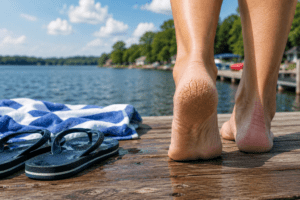
Michigan summers are made for outdoor fun. Between sunny days boating on Lake St. Clair, long walks along the St. Clair Shores waterfront, and warm weekend gatherings in Fraser, summer gives everyone a reason to trade heavy winter boots for sandals and lighter footwear. But by late summer, many Macomb County residents notice that months spent in flip-flops, slides, or walking barefoot have taken a toll on their feet.
You deserve to walk comfortably and feel confident about your feet. Yet common summer foot problems such as cracked heels, itchy or peeling skin, and thick or discolored toenails can leave you uncomfortable and frustrated.
These problems can affect anyone and are not necessarily a sign of poor hygiene. Summer heat, moisture, increased activity, shared wet environments, and footwear choices can all contribute to skin and nail problems. Understanding why these issues happen — and when they need professional attention — is the first step toward healthier, more comfortable feet.
In our Fraser and St. Clair Shores offices, we see this pattern every year: patients who spent the summer in sandals come in around September with cracked heels, stubborn athlete’s foot, or toenail changes that never fully cleared up on their own. If that sounds familiar, here’s what’s actually happening — and when it’s worth having it looked at.
What Three Months of Sandals Can Do to Your Feet
Sandals and flip-flops are convenient on hot days, but many provide less structure, support, and protection than well-fitting supportive shoes. After months of summer activity, a combination of environmental exposure, moisture, pressure, and friction can contribute to several common foot problems.
- Dry, exposed skin: Open-backed footwear leaves the heels exposed and may contribute to moisture loss and dry, less flexible skin.
- Repeated pressure and friction: Weight-bearing causes the heel pad to expand with each step. When the surrounding skin becomes dry, thick, and less flexible, painful cracks or fissures can develop.
- Warm, damp environments: Public pools, splash pads, locker rooms, shared showers, and other moist communal surfaces create environments where the fungi that cause athlete’s foot thrive.
- Unsupportive footwear: Wearing flat, unsupportive footwear for long periods increases strain on the feet, and repetitive pressure and friction can contribute to calluses and discomfort.
By late summer, what started as mild dryness or irritation may develop into a persistent skin or nail problem that deserves closer attention.
Cracked Heels: Why They Split and What Can Help
Understanding the common causes of cracked heels can help you address the problem before deep fissures become painful or begin to bleed.
The skin around your heels is naturally thicker than skin on many other parts of your body. When that skin becomes dry and rigid, it loses some of its ability to stretch. As you stand and walk, your body weight causes the heel pad to expand. Dry, thickened skin may be unable to accommodate that pressure and can eventually crack.
Several summer habits can make cracked heels worse:
- Walking barefoot on hard surfaces such as patio decks, tile, or concrete
- Wearing backless sandals, slides, or other open-heeled footwear
- Allowing the skin around the heels to become excessively dry
- Using harsh soaps or very hot water that further dries the skin
Regular body lotion often doesn’t provide enough moisture for thick, dry heel skin. Foot creams containing urea can help soften hardened skin and restore moisture; some products also include exfoliating ingredients such as salicylic acid. Apply moisturizer after bathing while skin is still slightly damp, and wear clean, comfortable socks afterward to help retain moisture.
If your heels are deeply cracked, bleeding, painful, red, or swollen, avoid aggressive filing or pumice stones and have them evaluated by a podiatrist. People with diabetes, neuropathy, or poor circulation should check with their healthcare provider before using medicated or exfoliating foot products, and should have any open fissure evaluated promptly rather than treated at home.
Athlete’s Foot: Where It Comes From and How to Reduce Reinfection
Athlete’s foot, also called tinea pedis, is a fungal skin infection commonly caused by dermatophytes that thrive in warm, moist environments. You don’t have to be an athlete to develop it — the fungus spreads through direct contact or contaminated surfaces, including locker room floors, communal showers, pool areas, towels, socks, and footwear.
Common symptoms include:
- Itching or burning
- Peeling, scaling, or cracking skin
- Irritation between the toes or along the soles
- Small blisters, in some cases
Left untreated, athlete’s foot can persist, recur, or spread to other areas of the foot — and to the toenails, since the same fungus responsible for athlete’s foot is often what establishes a nail infection.
To treat it and reduce the chance of it coming back:
- Dry between your toes. Thoroughly dry your feet, especially between the toes, after bathing or swimming.
- Rotate your footwear. Give shoes time to fully dry between uses instead of repeatedly wearing damp footwear.
- Keep shoes and socks dry. Change out of damp socks promptly, and use antifungal shoe products when appropriate.
- Protect your feet in communal areas. Wear sandals or water shoes around pools, locker rooms, and shared showers.
Mild athlete’s foot often responds to an appropriate over-the-counter antifungal used as directed. If symptoms aren’t improving, keep returning, or become painful or widespread, a podiatry evaluation can confirm the diagnosis and determine whether prescription treatment is needed. Learn more about our athlete’s foot treatment options.
Thick, Yellow, or Crumbling Toenails? It Could Be Fungus
If your toenails have become yellow, thick, brittle, or difficult to trim, it’s easy to assume they’re simply stained or damaged from summer activity. But these changes can also indicate toenail fungus, known clinically as onychomycosis — often caused by the same fungus responsible for athlete’s foot, entering through a small opening around or beneath the nail.
Common signs include:
- Yellow, brown, white, or dull discoloration
- Thickened or distorted nails
- Brittle or crumbling edges
- Debris underneath the nail
- Nails that become increasingly difficult to trim
Not every thick or discolored toenail is caused by fungus. Repetitive trauma, psoriasis, aging, and other nail conditions can look similar. That’s why proper evaluation matters: a podiatrist can examine the nail and, when appropriate, recommend testing to confirm whether fungus is actually present before starting treatment.
For patients seeking toenail fungus treatment in Macomb County, our team evaluates the underlying cause of nail changes and recommends treatment based on the severity of the condition and your overall health — since surface washes and polish removers can’t reach an active infection at the nail bed.
Why Healthy-Looking Toenails Can Take Months to Grow Back
One of the most common questions we hear is how long toenail fungus actually takes to clear. Even after treatment begins controlling the infection, the damaged portion of the nail doesn’t instantly return to normal — it has to gradually grow out as healthier nail replaces it.
Toenails grow slowly, often only about 1 to 2 millimeters per month. A big toenail can take approximately 12 to 18 months to fully grow out, so visible improvement requires patience. Treatment duration and nail regrowth time aren’t the same thing — the infection itself may be controlled well before the nail looks fully clear.
This is part of why starting treatment in late summer or fall makes sense, rather than waiting for sandal season to return:
- More time to regrow. Fall and winter give healthy nail several additional months to replace damaged areas before next summer.
- Less chance of spreading. Treating the infection and following good foot hygiene can reduce the chance of it spreading to neighboring nails or other household members.
- Added importance for at-risk patients. Persistent fungal infections deserve particular attention in people with diabetes, neuropathy, or circulation problems, where minor infections carry higher complication risk.
When Should You Stop Treating Foot Problems Yourself?
Some mild summer foot problems improve with proper home care or appropriate over-the-counter treatment. But persistent, recurrent, painful, or worsening symptoms deserve a professional look. Consider seeing a podiatrist if you notice:
- Heel cracks that are deep, painful, bleeding, or not healing
- Athlete’s foot that doesn’t improve with appropriate treatment
- Skin redness, warmth, swelling, drainage, or increasing pain
- Thick, discolored, brittle, or distorted toenails
- Recurrent fungal infections
- Any foot or nail change, if you have diabetes, neuropathy, or poor circulation
Professional evaluation also matters because several skin and nail conditions can look alike. Identifying the actual cause is what ensures you’re treating the right problem — instead of managing symptoms for months without addressing what’s actually going on.
Expert Skin and Nail Care in Macomb County
At Eastside Podiatry PLLC, our physician-led team — Hatim T. Burhani, DPM, FACFAS; Siraj Panchbhaiya, DPM, FACFAS; and Bhavik Patel, DPM — brings decades of combined clinical experience to patients throughout Macomb and Wayne County and the broader Metro Detroit area.
With offices in Fraser and St. Clair Shores, our practice takes a conservative, patient-centered approach to foot and ankle care. We start by identifying the actual cause of your symptoms, then build a treatment plan around your specific needs — without steering you toward a costly option when a simpler one will work just as well.
Whether you’re dealing with thick or discolored toenails, persistent athlete’s foot, painful heel cracks, diabetic foot concerns, or another foot condition, our goal is to get you back to walking comfortably and confidently. Explore our podiatry services or read what patients have shared on our testimonials page or Google Reviews link. Virtual visits may be available for appropriate consultations and follow-ups; some skin and nail conditions require an in-person exam or in-office treatment.
Frequently Asked Questions
What causes cracked heels during summer?
Cracked heels commonly develop when dry, thickened skin around the heel is repeatedly placed under pressure. Walking barefoot and wearing open-backed footwear often contribute, since both leave the heel exposed and allow the skin to become dry and less flexible.
How can I tell if I need professional treatment for athlete’s foot?
Mild athlete’s foot often responds to an over-the-counter antifungal used as directed. If itching, scaling, burning, or cracking doesn’t improve, keeps returning, spreads, or becomes painful, a podiatrist can evaluate the condition and recommend appropriate treatment.
Can a yellow or thick toenail be something other than fungus?
Yes. While fungal infections commonly cause thick, yellow, brittle, or distorted toenails, similar changes can result from repeated trauma, psoriasis, aging, or other nail conditions. A podiatrist can evaluate the nail and determine whether testing is appropriate.
What’s the benefit of starting toenail fungus treatment in the fall?
Toenails grow slowly, so visible improvement can take many months even after treatment begins working. Starting in late summer or fall gives healthy nail more time to grow in before the next sandal season.
How long does toenail fungus take to fully clear?
It varies with severity and treatment, but a big toenail typically takes about 12 to 18 months to fully grow out even after the infection is controlled. Treatment duration and full visible regrowth aren’t the same timeline.
Are virtual podiatry visits available for skin and nail conditions?
Eastside Podiatry may offer virtual consultations or follow-up visits when appropriate. Some skin and nail problems, however, require an in-person exam, diagnostic testing, or in-office treatment.
When should someone with diabetes seek professional foot care?
People with diabetes, neuropathy, or poor circulation should take new skin breaks, persistent peeling, redness, swelling, drainage, or nail changes seriously, and should contact their podiatrist promptly — especially if there’s an open wound or any sign of infection.
Cracked heels, persistent athlete’s foot, and changing toenails are easier to address once you know what’s actually causing them. Take the first step toward healthier, more comfortable feet. Schedule a skin and nail assessment with Eastside Podiatry PLLC today.
Sources: American Podiatric Medical Association (apma.org); American College of Foot and Ankle Surgeons (acfas.org)