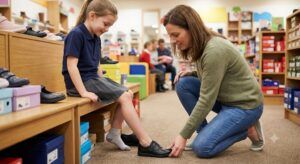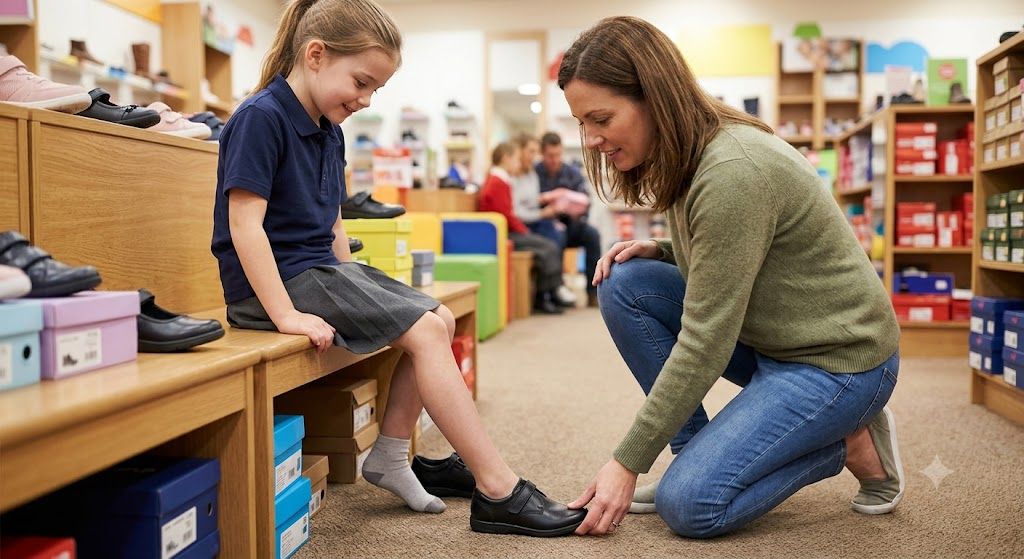
Back-to-school season in Macomb County brings new backpacks, busy schedules, and, for many families, a trip to buy new school shoes. Every parent wants their child to start the school year ready for the classroom, recess, gym class, and after-school activities.
But even a great-looking pair of shoes can become a problem if it doesn’t fit properly. If your child comes home complaining of sore feet, develops blisters or redness, or constantly wants to take off their shoes, their footwear may be part of the problem.
Persistent foot discomfort shouldn’t simply be dismissed as part of growing up. Knowing how children’s school shoes should fit — and recognizing when foot pain deserves a closer look — can help keep your child comfortable and active throughout the school year.
In our Fraser and St. Clair Shores offices, we see a predictable rise in heel and foot pain visits every fall, right as kids return to soccer, cross country, and other fall sports in new shoes. A lot of it traces back to fit or to growth-related conditions like Sever’s disease, both of which are easy to address early and harder to manage if a child plays through the pain for weeks.
The Four-Point Shoe-Fitting Check to Do in the Store
When buying school shoes, don’t rely only on your child saying they “feel fine.” Younger children may be more interested in the color, style, or favorite character on a shoe than how well it actually fits.
Instead, use this simple four-point check before leaving the store:
- The Toe-Room Test: Have your child stand normally with their weight on both feet. Check for about a thumbnail’s width of space between their longest toe and the end of the shoe. Their toes should also have enough room to move comfortably without feeling squeezed.
- The Heel Test: Gently squeeze the back of the shoe around the heel. A reasonably firm heel counter helps keep the heel stable inside the shoe. When your child walks, the heel should feel secure rather than repeatedly slipping up and down.
- The Flex Test: Bend the shoe gently with your hands. It should flex where the toes naturally bend while remaining reasonably stable through the middle of the shoe. A shoe that twists or folds easily through the arch may not provide enough support for active school days.
- The Width and Seam Check: Make sure the widest part of your child’s foot lines up comfortably with the widest part of the shoe. Check inside for rough seams, thick stitching, or pressure points that could rub against the skin and cause irritation or blisters.
Have your child try on both shoes with the same type of socks they’ll normally wear to school. If possible, shop later in the day, when feet may be slightly larger after hours of walking and activity.
Most importantly, shoes should feel comfortable from the beginning. Don’t count on a painful pair “breaking in” over time.
Why Buying a Size Up to “Grow Into” Can Backfire
Children grow quickly, so it can be tempting to buy school shoes significantly larger in hopes they’ll last the entire year.
But extra room isn’t always better.
When shoes are too large, the foot may slide inside them while walking or running. That movement can increase friction, contribute to blisters, and make the shoes feel unstable. Oversized shoes may also make it harder for a child to move naturally during recess, gym class, or sports and can increase the chance of tripping.
Instead of buying significantly oversized shoes, choose a pair that fits comfortably now with appropriate growing room at the toes.
Because children’s feet can change quickly, check the fit every few months — and sooner during a growth spurt. Recheck whenever your child starts complaining of pressure, develops redness or blisters, or suddenly doesn’t want to wear a particular pair.
“Growing Pains” That Aren’t: Sever’s Disease and Heel Pain in Active Kids
Occasional aches can happen as children grow and become more active. But persistent, localized heel pain — especially pain that worsens with running or jumping — shouldn’t automatically be dismissed as “growing pains.”
One common cause of heel pain in active children is Sever’s disease, also called calcaneal apophysitis.
Despite the name, Sever’s disease isn’t a disease in the traditional sense. It is an irritation of the developing growth plate at the back of the heel and often affects active children roughly 8 to 14 years old during periods of rapid growth.
As children grow, the heel bone, calf muscles, and Achilles tendon are changing quickly. Activities such as running and jumping repeatedly load the developing heel. This can irritate the growth plate, particularly in children who participate frequently in sports.
Poorly supportive, worn-out, or inappropriate footwear may add to the stress, but footwear alone does not cause Sever’s disease.
Signs of Sever’s disease may include:
- Pain or tenderness at the back or sides of the heel
- Heel pain that becomes worse during or after running and jumping
- Limping during or after sports
- Walking on the toes to avoid pressure on the heel
- Symptoms that improve with rest and return with activity
Sever’s disease is temporary and generally resolves as the heel growth plate matures. However, that doesn’t mean children need to simply play through the pain.
Early evaluation and appropriate treatment can reduce discomfort, limit time away from activities, and help your child return to sports safely.
If your child has persistent heel pain, learn more about heel pain care and sports injury treatment at Eastside Podiatry.
Flat Feet in Children: When It’s Normal and When It Isn’t
Parents often become concerned about flat feet after noticing their child’s footprints at the pool, beach, or around the house.
The good news is that flat feet are very common in young children.
Young feet naturally have more soft tissue beneath the arch, and the bones, muscles, and ligaments are still developing. As the foot matures, an arch often becomes more noticeable by around age 6. Some children, however, continue to have flexible flat feet into adolescence or adulthood without ever developing pain or limitations.
What are flexible flat feet?
With flexible flat feet, the arch may be visible when your child is sitting or standing on tiptoes but flatten when they stand normally.
If your child has flexible flat feet but no pain, difficulty walking, or activity limitations, treatment is usually unnecessary.
Flat feet deserve a closer look when your child experiences:
- Pain, aching, or cramping in the feet, ankles, or lower legs
- Frequent fatigue or difficulty keeping up during physical activities
- Limping or noticeable changes in walking or running
- A foot that remains flat and stiff even while sitting or standing on tiptoes
- Persistent difficulty finding comfortable shoes
Painful or rigid flat feet should be evaluated because, although less common, certain structural conditions can restrict foot movement and cause discomfort.
If low arches are causing pain or limiting activity, a podiatrist can evaluate your child’s foot structure, flexibility, walking pattern, and footwear. Treatment may include stretching, supportive shoes, activity modifications, or shoe inserts depending on the cause and severity of the symptoms.
Learn more about flat feet treatment at Eastside Podiatry.
Does My Child Need Custom Orthotics?
Not every child with flat feet needs custom orthotics.
In fact, painless flexible flat feet generally do not require treatment. Shoe inserts do not create an arch or permanently change the normal development of a flexible flat foot.
When flat feet cause pain, fatigue, or difficulty with activities, however, additional support may help improve comfort and function. Depending on your child’s needs, a podiatrist may recommend supportive footwear, stretching, over-the-counter inserts, or custom orthotics.
The goal isn’t to make every child’s foot look the same. It’s to help your child move comfortably and participate in the activities they enjoy.
Signs Your Child Should See a Podiatrist
Children don’t always say, “My feet hurt.”
Sometimes the first clue is a change in behavior. A child may stop participating in an activity, begin limping, or constantly take off shoes that have become uncomfortable.
Watch for signs such as:
- Persistent or recurring foot or heel pain
- Unexplained limping or changes in walking or running
- Suddenly avoiding sports, recess, or activities they normally enjoy
- Frequently taking off their shoes or complaining that their feet feel tired
- Recurring ingrown toenails, blisters, or areas of redness
- A foot that appears stiff or has limited movement
- Pain that repeatedly returns during sports or physical activity
Seek prompt medical attention rather than waiting for a routine appointment if your child has a fever, significant or rapidly worsening swelling, is unable to bear weight on the foot at all, or has pain that wakes them up at night. These can point to something beyond typical growth-related discomfort and deserve timely evaluation.
If your child has persistent foot pain that you’ve assumed was “growing pains,” a podiatry evaluation can help determine whether there is an underlying problem.
At Eastside Podiatry PLLC, Dr. Hatim T. Burhani, DPM, FACFAS; Dr. Siraj Panchbhaiya, DPM, FACFAS; and Dr. Bhavik Patel, DPM provide personalized foot and ankle care for children and adults throughout Macomb County and surrounding Metro Detroit communities.
With offices in Fraser and St. Clair Shores, our team cares for children with heel pain, flat feet, sports injuries, ingrown toenails, and other foot concerns. We take a conservative-first approach, recommending treatment based on your child’s symptoms, activity level, foot structure, and individual needs.
Our goal is simple: help your child stay comfortable, active, and confident on their feet.
Frequently Asked Questions for Parents
How often should I check whether my child’s school shoes still fit?
Check shoe fit every few months and sooner during periods of rapid growth. You should also recheck the fit if your child develops redness or blisters, complains that the shoes feel tight, or suddenly seems reluctant to wear a particular pair.
Can poorly fitting school shoes cause foot problems in children?
Poorly fitting shoes can cause blisters, calluses, nail irritation, pressure points, and general foot discomfort. They may also aggravate existing foot problems. Shoes that repeatedly cause pain or visible irritation should be replaced rather than waiting for your child to “break them in.”
How can I tell whether my child’s heel pain is Sever’s disease or a minor strain?
Sever’s disease commonly causes heel pain that worsens with running and jumping and improves with rest. The heel may also be tender when pressure is applied around its sides or back. Because strains and other conditions can cause similar symptoms, persistent heel pain or limping should be professionally evaluated.
Are custom orthotics necessary for children with flat feet?
Most children with painless, flexible flat feet do not need custom orthotics. If flat feet cause pain, fatigue, or interfere with activity, a podiatrist may recommend supportive footwear, stretching, over-the-counter inserts, or custom orthotics to improve comfort and function. Orthotics support the foot; they do not make a normal flexible flat foot develop a permanent arch.
Are virtual visits available for pediatric foot concerns?
Virtual visits may be appropriate for selected consultations and follow-up needs. However, persistent heel pain, limping, rigid flat feet, gait changes, or other structural concerns may require an in-person examination to properly evaluate your child’s foot movement and alignment.
Give Your Child Comfortable Steps This School Year
Your child shouldn’t have to spend the school day distracted by shoes that pinch, rub, or hurt — and persistent foot pain shouldn’t automatically be dismissed as growing pains.
Choosing shoes that fit properly and paying attention when discomfort persists can help keep your child comfortable through the classroom, recess, gym class, and after-school activities.
If your child is experiencing persistent heel pain, difficulty walking, recurring foot problems, or discomfort that is keeping them from activities they enjoy, schedule a children’s foot evaluation with Eastside Podiatry PLLC at our Fraser or St. Clair Shores office.
Sources: American Academy of Pediatrics (healthychildren.org); American Podiatric Medical Association (apma.org)