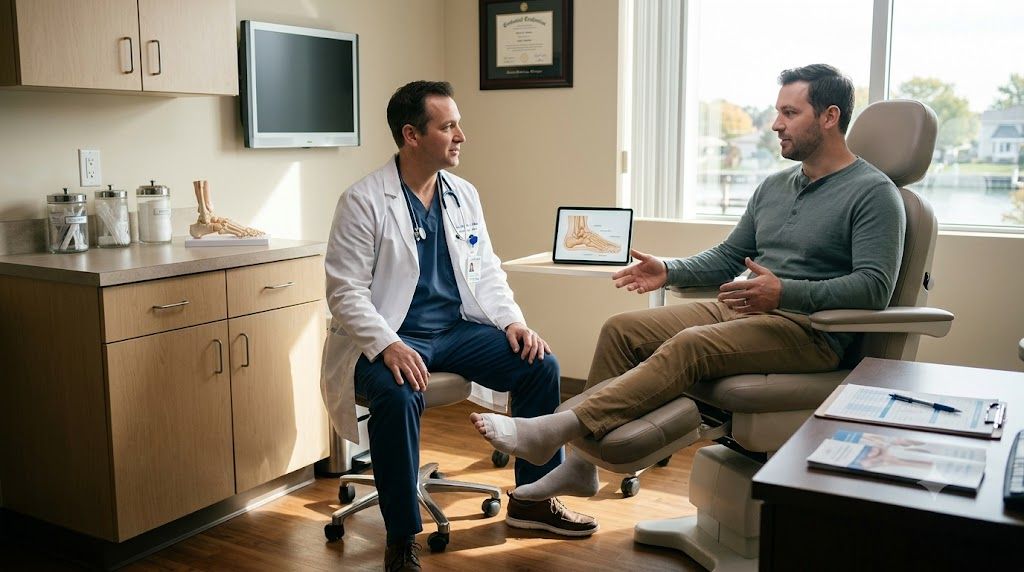
Home remedies may temporarily ease the pain of an ingrown toenail, but they don’t always address what’s causing the nail edge to press into the surrounding skin.
When the problem keeps returning, a podiatrist can remove the troublesome nail edge and, when appropriate, treat the part of the nail root responsible for its regrowth. The goal is to relieve the pain, protect the surrounding skin, and reduce the chance of another ingrown toenail.
If your toe hurts right now:
- Do soak it in warm water for comfort and wear shoes with plenty of room around your toes.
- Don’t dig, cut, or pry beneath the nail with clippers or tweezers.
- Don’t cut a V in the middle of your nail. It won’t make the ingrown edge move away from your skin.
- Contact a podiatrist promptly if you notice increasing redness, swelling, drainage, or signs of infection—especially if you have diabetes or poor circulation.
- Seek urgent medical attention for rapidly spreading redness, red streaks, fever, or chills.
You know the feeling. Your shoe presses against your toe. Your bedsheet brushes it at night, and you flinch. You’ve soaked it, trimmed it, and waited for it to settle down.
Then it comes back.
The frustrating part isn’t just the pain. It’s wondering why something so small keeps causing so much trouble.
This is one of the most common reasons patients come see us—usually after weeks of trying to manage it at home. Understanding what’s happening beneath the nail can help you decide when home care is enough, and when professional treatment may provide more lasting relief.
What’s Actually Happening Under the Skin?
Your toenail grows from a small area beneath the skin near the base of the nail. It’s called the nail matrix.
Think of it as your nail’s factory.
An ingrown toenail develops when the side edge of the nail presses into or penetrates the surrounding skin. This can cause tenderness, redness, swelling, and sometimes infection.
Several factors can contribute:
- Cutting toenails too short or rounding the corners
- Wearing tight shoes or shoes with narrow toe boxes
- Repeated pressure from sports or other activities
- Injuries to the toe or nail
- Naturally curved or thickened toenails
- Inherited nail shape
Sometimes, a mild ingrown toenail improves with conservative care and changes in footwear or trimming habits.
But when the same nail edge repeatedly presses into the surrounding skin, the problem may return even after temporary relief.
That’s where understanding the nail matrix becomes important.
For recurring ingrown toenails, a podiatrist may recommend treating the small portion of the matrix that produces the troublesome nail edge, making it much less likely to grow back.
The V-Notch Myth: Why Cutting the Middle of Your Nail Doesn’t Help
Maybe a friend or an online article suggested cutting a small V in the middle of your toenail.
The idea is that the sides of the nail will somehow pull inward toward the notch, releasing the ingrown edges from the surrounding skin.
It sounds clever.
But toenails don’t work that way.
Your nail grows forward from the nail matrix. Cutting a notch in the center doesn’t cause the sides to shift inward or stop an ingrown edge from pressing into your skin.
Instead, the troublesome edge remains where it was.
For routine nail care, a better approach is to:
- Trim your toenails straight across.
- Avoid cutting them too short.
- Leave the corners visible rather than digging down the sides.
- Wear shoes that give your toes enough room.
These habits may help reduce the risk of ingrown toenails, although nail shape, injury, and other factors can still contribute.
Why Digging Out an Ingrown Toenail Can Make It Worse
It’s tempting to perform a little “bathroom surgery” when an ingrown toenail hurts.
You grab the clippers, try to cut away the painful corner, and hope the problem is solved.
Sometimes you feel better for a day or two.
Then the pain returns.
Here’s why attempting to dig out an ingrown nail can make matters worse:
- Sharp nail edges: Cutting too far down the side can leave a small, sharp nail fragment that continues pressing into the skin as the nail grows.
- Skin injury: Digging beneath the nail can tear or puncture the surrounding tissue, increasing irritation and swelling.
- Infection risk: Household tools can introduce bacteria into damaged skin.
- Recurring pressure: Removing a small visible corner may not address the nail shape or pressure that caused the problem.
A Special Caution for Patients With Diabetes
If you have diabetes, neuropathy, or poor circulation, avoid cutting or digging out an ingrown nail yourself.
These conditions can increase the risk of unnoticed injuries, delayed wound healing, or infection.
Gentle cleaning and wearing roomy footwear may help protect the toe while you arrange care, but attempting to remove the nail edge yourself can create additional problems.
Contact a podiatrist promptly for an evaluation, especially if the skin is broken or you notice redness, swelling, or drainage.
Signs Your Ingrown Toenail Needs Medical Attention
An ingrown toenail can cause inflammation even when there isn’t an infection.
However, increasing redness, swelling, drainage, or worsening pain may indicate that the surrounding tissue needs professional treatment.
Contact a podiatrist promptly if you notice:
- Increasing pain or tenderness around the nail
- Persistent swelling or redness
- Pus or cloudy drainage
- Skin growing over the nail edge
- An ingrown toenail that keeps returning
- Symptoms that aren’t improving with appropriate conservative care
When Is an Ingrown Toenail More Urgent?
Seek urgent medical evaluation if you develop:
- Redness spreading rapidly beyond the toe
- Red streaks extending up the foot
- Fever or chills
- Significant or rapidly worsening swelling
- Severe pain or other signs of a spreading infection
Patients with diabetes, poor circulation, neuropathy, or weakened immune systems should be particularly cautious and seek timely professional care for new nail-related wounds or signs of infection.
Treating the problem early can help reduce discomfort and the risk of further complications.
Ingrown Toenail Removal: What Happens During the Office Visit?
For many patients, the biggest concern isn’t the ingrown toenail itself.
It’s the thought of having it removed.
Will it hurt? Will I lose my whole nail? Will I be able to walk afterward?
The good news is that many ingrown toenail procedures can be performed in the podiatrist’s office using local anesthesia.
Here’s what you can generally expect.
Step 1: We Examine Your Toe
Your podiatrist examines the nail, surrounding skin, and any signs of inflammation or infection.
They’ll also consider whether the problem is new or recurring, along with medical conditions that may affect healing.
Not every ingrown toenail requires a procedure. Mild cases may respond to conservative treatment.
Step 2: We Numb the Toe
If nail removal is recommended, a local anesthetic is used to numb the affected toe.
The injection may cause brief discomfort, but once the anesthetic takes effect, the procedure is generally well tolerated.
You may still feel pressure or movement, but the goal is to keep you comfortable during treatment.
Step 3: We Remove the Problem Edge
In many cases, only the narrow portion of the nail pressing into the skin needs to be removed.
This is called a partial nail avulsion.
The rest of the nail is generally left in place, allowing the toe to retain most of its normal appearance.
Your podiatrist will determine whether partial removal is appropriate based on the condition of the nail and surrounding tissue.
Step 4: We Dress the Toe and Explain Aftercare
After treatment, the toe is dressed, and you’ll receive instructions for keeping the area clean, changing dressings when needed, and protecting it as it heals.
Most patients can walk out of the office with appropriate footwear, although activity recommendations depend on the procedure and individual circumstances.
Relief from the pressure of the ingrown nail edge may begin soon after removal, but some tenderness or drainage can occur during healing.
Your podiatrist will explain what to expect and when you can safely return to your normal activities.
Why Some Ingrown Toenails Keep Coming Back
Removing the ingrown portion of the nail can relieve the immediate problem.
But if the nail matrix is left intact, that portion of the nail may eventually grow back.
For someone with a recurring ingrown toenail, that can mean dealing with the same painful edge again.
When appropriate, your podiatrist may recommend a procedure designed to reduce the likelihood of recurrence.
What Is a Partial Matrixectomy?
A partial matrixectomy treats the small portion of the nail matrix responsible for producing the troublesome nail edge.
Depending on the clinical situation and the method used, the matrix may be treated chemically or through another technique.
The goal is to prevent that narrow section of nail from regrowing while preserving the remaining nail.
What Does That Mean for Your Toe?
- The troublesome nail edge is much less likely to grow back.
- Most of the nail can generally remain intact.
- The nail may appear slightly narrower after healing.
- The likelihood of the same edge becoming ingrown again is significantly reduced.
A partial matrixectomy is intended to provide a lasting solution, but no procedure guarantees that recurrence is impossible.
Your podiatrist can explain whether this approach is appropriate for your particular nail, including any factors that may affect healing.
How Long Does It Take to Recover From Ingrown Toenail Removal?
Recovery depends on the type of procedure, the condition of the surrounding skin, and your overall health.
For example, removing only the ingrown nail edge may involve a different healing process than a partial matrixectomy.
Many patients can return to routine daily activities relatively soon, but some tenderness, drainage, or temporary activity restrictions may be expected.
Your podiatrist will provide specific instructions regarding:
- Cleaning and dressing the treated area
- Appropriate shoes during recovery
- Bathing and keeping the area protected
- Returning to exercise or strenuous activities
- Signs that require a follow-up evaluation
The important thing is to follow your individualized aftercare instructions rather than assuming every ingrown toenail procedure has the same recovery timeline.
Ingrown Toenail Treatment in St. Clair Shores and Fraser
At Eastside Podiatry PLLC, our team includes board-certified foot and ankle specialists Dr. Hatim T. Burhani, DPM, FACFAS, and Dr. Siraj Panchbhaiya, DPM, FACFAS, along with Dr. Bhavik Patel, DPM.
Together, they provide comprehensive foot and ankle care for patients throughout Macomb County, Wayne County, and surrounding Metro Detroit communities.
Our podiatrists evaluate the severity of the ingrown nail, surrounding skin, signs of infection, and likelihood of recurrence before recommending treatment.
We take a conservative-first approach, recommending care based on your symptoms, medical history, and individual needs.
Whether you’re dealing with your first painful ingrown toenail or one that keeps coming back, our goal is to help relieve the discomfort and address the factors contributing to the problem.
Getting Help Is Simple
- Schedule an appointment at our St. Clair Shores or Fraser office.
- Get a thorough evaluation to understand what’s causing the pain and whether the nail or surrounding tissue needs treatment.
- Receive a personalized treatment plan, which may include conservative care or an in-office procedure when appropriate.
Frequently Asked Questions About Ingrown Toenails
How do I fix an ingrown toenail permanently?
For recurring ingrown toenails, a podiatrist may recommend a partial matrixectomy. By treating the portion of the nail matrix responsible for the troublesome edge, the procedure significantly reduces the chance that the same problem will return. Although it is designed to provide a lasting solution, recurrence is still possible.
Will I lose my whole toenail?
Usually not. Many ingrown toenails can be treated by removing only the narrow portion of the nail pressing into the skin. Your podiatrist will determine whether partial removal is appropriate or whether more extensive treatment is necessary.
Does ingrown toenail removal hurt?
The toe is generally numbed with a local anesthetic before the procedure. You may feel brief discomfort during the numbing injection and pressure or movement during treatment. Some tenderness may occur after the anesthetic wears off.
How long does it take to recover from ingrown toenail removal?
Recovery varies depending on the procedure and your health. Many patients can resume routine daily activities relatively soon, but healing time, drainage, tenderness, and restrictions on exercise can differ. Your podiatrist will provide aftercare instructions tailored to your treatment.
Can an infected ingrown toenail heal without antibiotics?
Not every inflamed ingrown toenail has a bacterial infection, and antibiotics aren’t always necessary. Treatment may involve addressing the ingrown nail edge and caring for the surrounding tissue. If a bacterial infection is present, your podiatrist will determine whether antibiotics or additional treatment are needed.
How much does ingrown toenail removal cost?
The cost depends on the treatment performed, your insurance coverage, and any applicable deductible or copay. Contact Eastside Podiatry to confirm insurance participation and discuss coverage for your visit.
Should I see a podiatrist if I have diabetes and an ingrown toenail?
Yes. If you have diabetes, particularly with neuropathy or circulation problems, avoid attempting to cut or dig out the nail yourself. A podiatrist can evaluate the toe and recommend treatment while considering your individual healing and infection risks.
Step Back Into Comfortable Shoes
Walking the dog. Getting through a workday. Sliding your feet under the covers at night.
Simple things shouldn’t mean dealing with the same painful toenail over and over.
If home remedies haven’t helped—or your ingrown toenail keeps returning—our podiatrists can evaluate the problem and recommend an appropriate treatment.
Schedule an ingrown toenail evaluation with Eastside Podiatry PLLC today.
St. Clair Shores 24025 Greater Mack Ave. #101 St. Clair Shores, MI 48080 (313) 884-7566
Fraser 31046 Utica Rd. Fraser, MI 48026 (586) 368-3112
Website: podeastside.com
Sources: American Podiatric Medical Association (apma.org); American College of Foot and Ankle Surgeons (acfas.org)